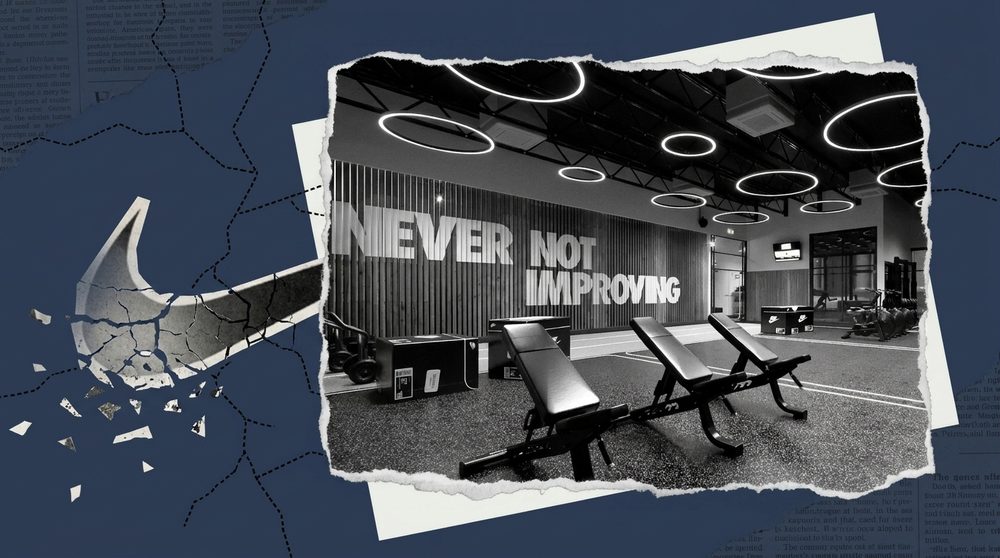
Nike closed its Fitness Studios this month, the latest reminder that a great logo is not a business model in boutique fitness. The brand had the capital, the real estate, and the marketing reach that every independent studio owner dreams about. It still couldn't make the format work.
This should be reassuring news for independent operators, not alarming. The instinct when a giant enters your category is to assume scale wins. Boutique fitness keeps proving otherwise — it's one of the few consumer categories left where a well-funded corporate entrant regularly loses to a founder with a folding table and a following.
What Nike didn't have was a method. Not a workout — a method. The kind of proprietary, ownable system that a member can name, defend to a friend, and feel loyal to. Equinox has one. Lululemon built an entire billion-dollar brand around a lifestyle system without ever running a traditional ad. Barry's has one. CrossFit, for all its baggage, absolutely has one. Nike Fitness Studios had trainers, equipment, and a swoosh — but no singular point of view a member could adopt as an identity.
Scale without a method is just an expensive room with mirrors.
— The Run RateNike also didn't have a founder story. Boutique fitness sells belief before it sells reps — a member joining a Barry's or a Rumble isn't just buying a class, they're buying into a person's obsession made physical. A brand extension launched out of a corporate innovation team doesn't have an obsessive founder standing behind it. It has a P&L target. Members can tell the difference, even if they couldn't articulate it.
This isn't the first time a giant has learned this lesson the expensive way. Big retailers and apparel brands have tried the fitness-studio-as-brand-extension play repeatedly over the past decade, and the pattern is consistent: strong opening numbers driven by brand awareness, followed by a retention cliff once the novelty wears off and members realize there's no real philosophy underneath the polish. The format looks like boutique fitness. It doesn't behave like it, because it wasn't built by someone who needed it to work.
Why does this matter for independent studio owners?
Because it means the thing independents fear most — a big, well-capitalized brand entering their category — is actually one of the weakest competitive threats in boutique fitness. Capital buys locations and marketing spend. It doesn't buy a method, a founder story, or a following, and those three things are what boutique members are actually paying for.
Nike isn't alone in learning this the hard way. The pattern shows up whenever a brand tries to buy its way into a category that runs on belief rather than convenience. Budget chains are having the opposite problem right now — fighting a price war at the bottom of the market while boutique studios that lead with identity keep raising prices and retaining members anyway. Capital-rich, method-poor brands get squeezed from both directions: they can't out-cheap the budget chains and they can't out-believe the boutiques.
This is genuinely useful information for how independent operators should be spending their anxiety. The instinct is to watch for the next well-funded entrant and assume the ground is about to shift. The actual threat list looks different: it's the boutique down the street with a sharper method and a founder who posts three times a day, not the corporate brand extension with a nine-figure marketing budget and no soul.
What independents should actually take from this:
Name your method. If a member can't describe what makes your studio's approach different from the gym across the street in one sentence, you don't have a method yet — you have a room with equipment in it. Studios that compete on identity rather than price are the ones extracting real pricing power right now, and identity starts with a name-able method.
Put a real person in front of the brand. Nike Fitness Studios had no face. Every boutique brand that's built a following has one — a founder, a lead instructor, someone members feel they know. That's not a marketing tactic, it's the actual product.
Don't confuse a competitor's budget with a competitor's threat level. Capital is necessary but nowhere near sufficient in this category. The businesses that should worry independent operators are the ones with less money and more conviction, not more money and less.
Nike will be fine — this was a rounding error on their balance sheet. But the lesson is worth more to a 200-member boutique studio than it is to Nike: in this category, belief beats budget, every time.