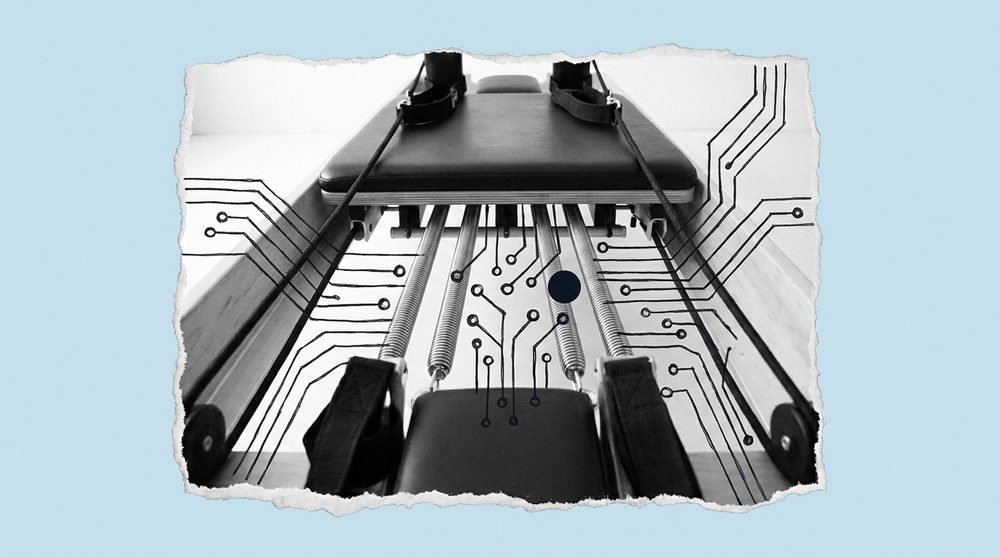
Crunch Fitness is opening Reform Pilates studios in 20 locations this month — reformers, integrated lighting and sound, digital programming screens, the whole boutique aesthetic, inside a big-box gym membership. Meanwhile STRONG Pilates just launched CONNECT, a system that builds tablets directly into its Rowformer and Bikeformer machines with real-time, color-coded performance feedback so instructors barely need to give verbal cues anymore.
Both moves point at the same idea: the Pilates workout itself is becoming buyable. Hardware, software, class formats — all of it can now be licensed, installed, and scaled by anyone with capital. The workout is no longer the moat. The only question left is whether the experience is buyable too.
The demand data explains why everyone wants in. Pilates has been ClassPass's most-booked workout for three straight years, with reservations up 66% in 2025 versus 2024 and more than 15 million bookings logged on the platform last year alone. That's not a niche trend anymore — it's the single largest category of demand in boutique fitness, which is exactly why a mainstream gym chain is willing to retrofit 20 locations to capture a slice of it.
The workout can be copied at scale. The experience has to be built one room, one instructor, one member relationship at a time.
— The Run RateThis is the second time a version of this story has played out. Pilates stopped being just a workout and became a business model the moment specialty studios figured out how to charge $40 a class for it — a pricing power built entirely on scarcity of instructor talent and the specificity of the room. Crunch and STRONG are now attacking that scarcity directly: more machines, more locations, software that reduces how much a great instructor actually needs to say.
Can a big-box gym actually replicate the boutique Pilates experience?
Not just by buying the equipment. The workout — the reformer, the class structure, even the biofeedback (real-time physiological and performance data shown back to the member mid-workout) tech — is now commodity, purchasable by any operator with capital. The experience — instructor expertise, room energy, the specificity of a studio that does only Pilates and nothing else — is still built by specialists, one class at a time, and doesn't scale the same way hardware does.
| Element | Commodity or moat | Why |
|---|---|---|
| Reformer hardware | Commodity | Buyable by any operator with capital |
| Class format + programming | Commodity | License-able; now delivered by software (CONNECT) |
| Real-time feedback tech | Commodity | Built into the machines, reduces instructor dependency |
| Instructor mastery | Moat | Years to build, scarce, doesn't ship with the machine |
| Single-format specificity | Moat | A studio that does only Pilates signals expertise a big-box can't |
| Room energy + community | Moat | Built one class, one member relationship at a time |
Crunch's new CEO has already signaled where the budget fitness wars are headed — and this rollout is the clearest evidence yet. It's a direct bet that most consumers can't tell the difference between "Pilates equipment" and "Pilates experience," and for a chunk of the market, that bet will pay off. Casual Pilates-curious members who just want the reformer workout at a lower price point than a specialty studio are exactly who Crunch is targeting, and they'll get them.
But that's not the whole market, and it's not the profitable end of it. Equinox doesn't compete on price — it competes on identity, and the same logic applies to specialty Pilates studios watching Crunch move into their category. A studio that does only Pilates, staffed by instructors who've spent years mastering the form, offering a room and a community a generalist gym structurally cannot fake, still has a real moat. It's just a narrower one than it used to be, and it now has to be actively defended instead of assumed.
The practical takeaway for specialty Pilates operators isn't panic. It's specificity. If Crunch is going to win the commodity end of the category on price and convenience, boutique studios need to stop competing on "we also have reformers" and start competing on the parts of the experience that genuinely can't be installed: instructor depth, community, and a level of individual attention that a 20-location retrofit rollout is not built to deliver. The studios that survive this wave will be the ones who make that difference impossible to miss — not the ones hoping members don't notice a $20 reformer class at the gym they already belong to.