New research out of Yale School of Management puts a number on something the fitness industry has assumed for years and never tested: whether charging someone makes them show up.
The study, published August 17 and forthcoming in Marketing Science, tracked nearly 12,000 users of a fitness-tracking app. About 7% upgraded to a premium tier at $39.99 a year within their first seven weeks. In the week after upgrading, those users were 11.4 percentage points more likely to log their exercise than comparable free users. By week seven the gap had narrowed to 7.9 points. After that, it was gone.
Weight loss followed the same curve. Premium users lost roughly 1.3 pounds more by week ten, and then the difference stopped being statistically significant.
Does paying for something make members stick with it?
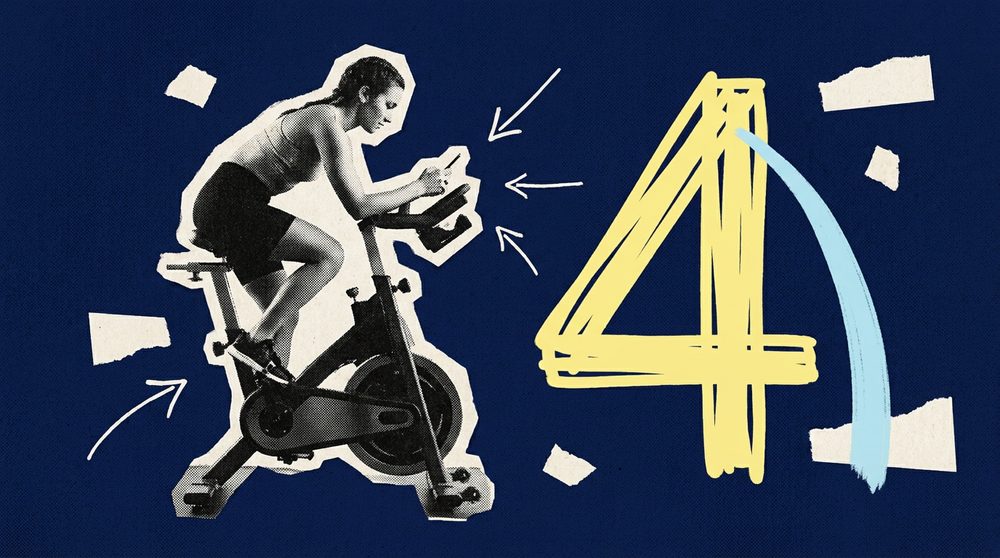
Not for long. The Yale data shows a paid tier produces a real behaviour change for roughly four weeks, after which paying members look like free ones. The money buys attention rather than habit. For gyms and studios, that means a price point cannot carry a retention strategy on its own, because the commitment effect operators assume they are buying with annual contracts and premium tiers decays inside the first billing cycle.
| Weeks after upgrading | Premium advantage in exercise tracking |
|---|---|
| Week 1 | +11.4 percentage points |
| Week 7 | +7.9 percentage points |
| Week 8 onward | No measurable difference |
The researchers, Kosuke Uetake at Yale with Yikun Jiang at Purdue and Nathan Yang at Illinois, attribute the pattern to hedonic decline (the fading of pleasure from a reward that repeats). Premium features feel like something at first. Then they feel like nothing.
This matters because so much of fitness pricing runs on the opposite belief. The annual contract, the founding-member tier, the premium app add-on: each is sold internally on the logic that a member who has paid more is a member who will turn up more. The sunk cost is supposed to do the work. On this evidence it does about a month of work.
It also lines up with what we have already seen elsewhere. South Korea's national exercise incentive doubled participation to roughly 700,000 people after halving the reward, which pointed to the same conclusion from the other direction: the incentive opens the door and something else has to keep people inside it. And when we looked at app retention running at 3% by day 30, the failure was never that the product was free. It was that nothing in the first month built a reason to return.
What the vintage of this data does and does not allow
One caveat worth stating plainly, because it changes how far the numbers travel. The cohort registered in late 2015. That is a decade-old app market, before smart rings, before ubiquitous wrist wearables, and before GLP-1 medications reshaped why people track anything. The direction of the finding is consistent with more recent evidence, but the absolute figures should be read as a snapshot of a much simpler product era, not as a 2026 benchmark.
What survives the vintage is the mechanism. Novelty decays. That was true of a 2015 app and it is true of a 2026 tier.
The four-week window is the actionable part
If paying buys about four weeks of elevated engagement, then the four weeks are the asset. Most operators spend that window on administration: the welcome email, the app download, the first billing cycle. The Yale curve suggests it should be spent on the only thing that outlasts it, which is a repeatable reason to come back that has nothing to do with what the member paid.
That reframes a few standard moves. A founding-member rate is an acquisition tool and should be measured as one, not counted on as a loyalty mechanism. A premium tier earns its place if the features keep changing, because a static premium tier is a novelty with a subscription attached. And when we wrote about how to price a boutique studio, the argument was that price signals quality on the way in. This research is the other half: price signals nothing at all by week eight.
The uncomfortable version, for anyone running a membership business, is that the billing relationship and the behaviour relationship are two different jobs. Most operators are staffed for the first one.