South Korea has spent the last two years running an experiment most fitness operators would kill to see the results of. The program is called Teunteun Money, and it pays ordinary citizens cash-equivalent points for working out. Thirty minutes of logged activity earns a small reward that can be spent at tens of thousands of shops. It is a national test on whether you can buy exercise behavior.
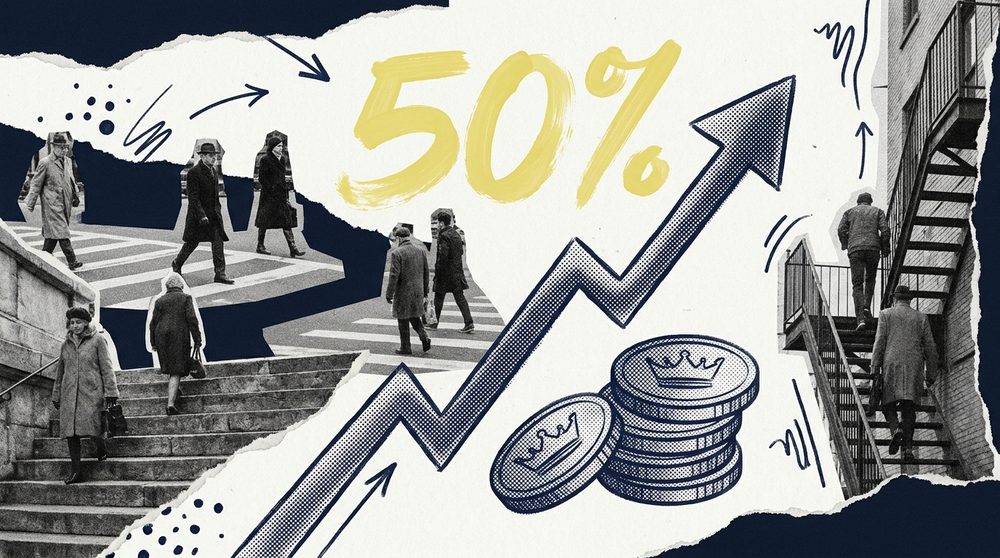
This year the government did something instructive. It cut the reward rate in half to manage runaway demand. If the money were the thing driving participation, halving it should have cooled the program off. It did the opposite. By the end of July, nearly 700,000 people had earned points, up from roughly 317,000 in the same stretch a year earlier, according to the Ministry of Culture, Sports and Tourism. Participation did not just hold after the cut. It doubled.
And people were not gaming it for the payout. Excluding sign-up bonuses, the average time each participant spent exercising rose 19 percent year over year, about two extra hours of movement per person. The reward got smaller and the behavior got bigger.
Why did participation rise after the reward was cut?
Because the money was never what kept people coming back. An incentive is very good at one job: getting someone to start. It lowers the friction of the first rep, the first class, the first logged walk. But once the behavior repeats enough times, it stops needing a reason. The streak becomes its own motivation. South Korea halved the payout at exactly the point where a critical mass of users had already crossed from doing it for the points to this is just what I do now. The reward was the on-ramp. The habit was the road.
This is the distinction that trips up most retention budgets. Extrinsic motivation (a reward or discount applied from the outside) is a fine tool for acquisition and reactivation. It is a terrible tool for retention, because the moment you remove it, the behavior it was propping up collapses. Studios that discount their way to a full class in January are not building loyalty. They are renting attendance, and the lease is up the second the promo ends.
The reward was the on-ramp. The habit was the road.
— The Run RateLook at what South Korea actually changed alongside the reward cut, and the habit story gets clearer. In March it launched a dedicated app that made logging frictionless and earned accessibility certifications for older users. In June it integrated private fitness apps and expanded the eligible activities from running to stair climbing and trail hiking, so the program met people inside routines they already had. Redemption points grew 30 percent to around 80,000 locations, so the reward felt present in everyday life rather than locked behind a portal. None of those moves are about paying more. They are about making the behavior easier to repeat until it sticks.
What this means for studio retention
Most operators know their retention number is a problem. We have written before about how 57 percent of studio members churn in year one, and how few operators can say why. The Korean data points at an answer that has nothing to do with price. Members leave before the behavior becomes automatic. The job of a retention program is to get a new member across the habit threshold before their initial motivation runs out, not to bribe them to stay after it already has.
That reframes what you should spend on. Here is the contrast in plain terms.
| The bribe | The habit |
|---|---|
| Discounts, free months, win-back offers | Onboarding that guarantees the first 8 to 12 visits |
| Works while the offer is live | Compounds after the offer would have ended |
| Trains members to wait for the next deal | Trains members to show up on schedule |
| Collapses the moment you stop paying | Survives the moment you stop paying |
The practical version is not exotic. Book a new member's first three sessions before they leave the front desk. Track visit streaks and celebrate them visibly, because a streak is the cheapest motivator you own and it costs nothing to surface. Build the light on-ramp formats that lower the friction of showing up on a low-energy day, the same way stair climbing lowered the bar in Korea. This is also why the operators who refuse to race their pricing to the bottom tend to retain better. They never taught their members that the relationship was about the discount in the first place.
South Korea just ran the experiment at national scale and published the result. You can shrink the reward and grow the behavior, as long as you spent the early money building a habit instead of buying attendance. The studios still discounting their way to retention are answering a question the data already settled.