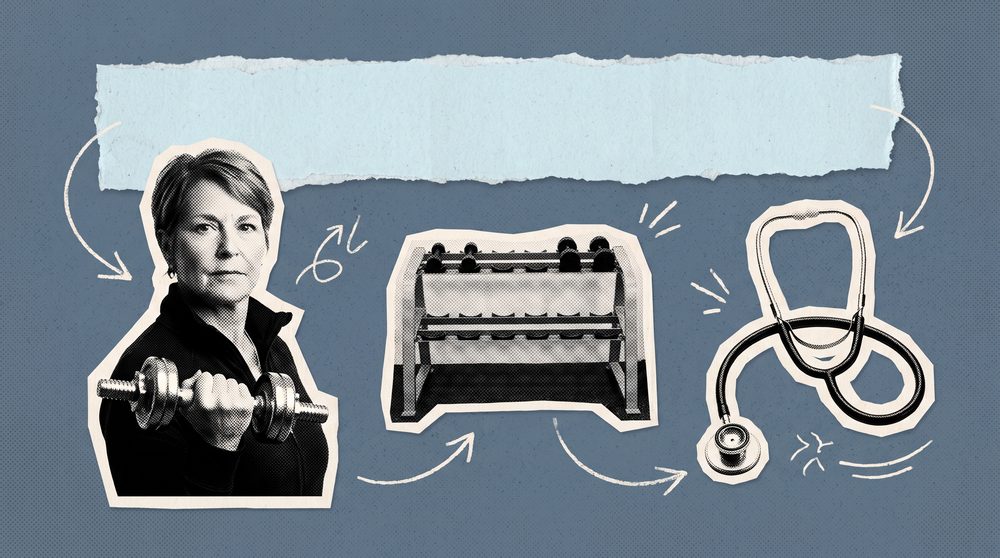
Federal survey data says that 23.8% of American women aged 45 to 64 do muscle-strengthening activity twice a week. Fewer than one in four.
The number comes from the CDC's National Health Interview Survey, published in the agency's Morbidity and Mortality Weekly Report. It counts people who said they did leisure-time activity specifically designed to strengthen muscles, such as lifting weights, push-ups or sit-ups, at least twice a week. Work does not count. It is self-reported.
| Age group | Men | Women |
|---|---|---|
| 18 to 44 | 44.5% | 34.1% |
| 45 to 64 | 29.9% | 23.8% |
| 65 and over | 22.0% | 17.2% |
| All adults 18+ | 35.2% | 26.9% |
One caveat before anyone builds a marketing campaign on that 23.8%. The survey year is 2020, gyms were shut for much of it, and the CDC had to switch to telephone interviewing partway through. The level is probably understated. What holds up is the shape: women sit below men in every single age band, and the gap does not close with age. That is the finding, and it is the one worth acting on.
Why don't more midlife women strength train?
Not because they are unmotivated. The barriers women actually report are not knowing where to start, worry about getting hurt, and finding the weights floor intimidating. Underneath all three sits something earlier and more fixable: most of them were never told to do it by anyone whose opinion carried weight. A recommendation has to come from somewhere, and for this group it mostly has not come at all. That makes it a referral problem before it is a motivation problem, and referral is something an operator can go and build.
The recommendation never happened
Here is the part gyms keep missing. Strength training in midlife is not a niche preference. It is the standard advice for bone density, for keeping muscle, for staying independent later. And a large share of women have never had that advice delivered to them by a doctor or a trainer.
A recent survey from the fitness brand Pvolve put the figure at 66%. Treat that number carefully. It was released alongside a product launch, and the company published no sample size, no fielding dates and no research firm, so it is a marketing asset rather than research. We mention it because the direction matches what the federal data implies, not because the figure can be relied on.
The federal data gets you there on its own. If roughly three quarters of women in this age band are not strength training, and the health case for it is as settled as it is, then the advice is not reaching them. Something in the referral chain is broken.
Why that is an opening rather than a complaint
The obvious fix is to have doctors do it. That channel is weaker than it used to be. We reported in July that public trust in doctors fell to 40%, which cuts both ways. It means the clinical referral carries less weight than it did. It also means the authority is up for grabs, and a gym that is genuinely competent with this population can hold it.
That competence is the constraint, not the marketing. Most fitness guidance was built on research that never included women, which is a real gap in what your staff were taught. And the on-ramp matters: we covered in August how rucking pulled women into strength work precisely because it did not start on the gym floor.
What to do about it
Three things, in order of how quickly they pay.
First, build the referral relationship you are currently waiting to receive. Physiotherapists, pelvic health clinics, menopause clinics and GP practices in your catchment all see this population and mostly have nowhere to send them. Go and be the place they send them. That is a handful of conversations, not a campaign.
Second, fix the first visit. If the reported barrier is not knowing where to start, then an unstructured tour of the floor is the worst possible answer. A named starting program with a fixed number of sessions removes the decision.
Third, check what your staff actually know. If a fifty-two year old member asks about training through perimenopause and gets an improvised answer, you have lost the authority you were trying to claim, and no amount of campaign spend buys it back.
The women in this data are not refusing. Most of them were never asked.