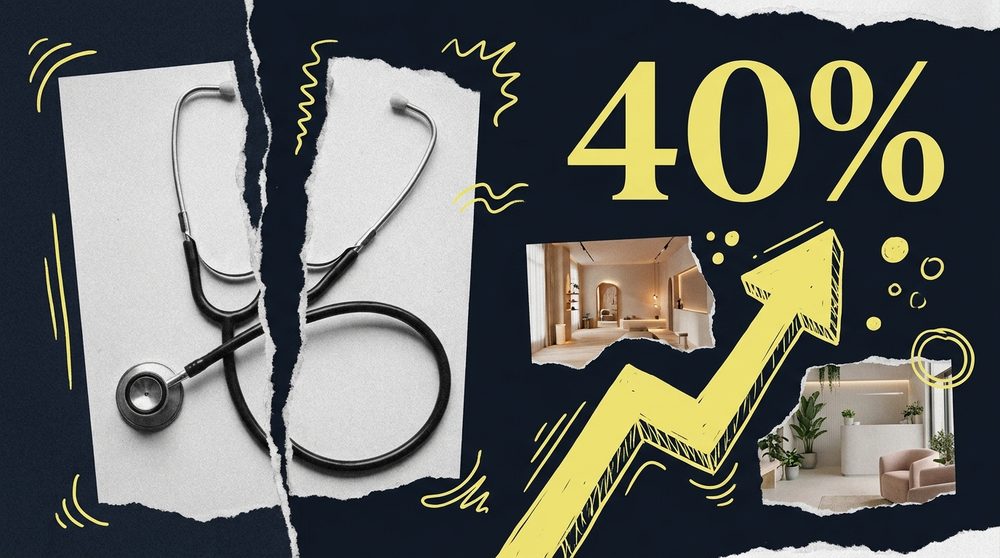
Here is the number every wellness operator should tape to the wall. Trust in doctors and hospitals fell from about 72% in 2020 to roughly 40% by 2024, according to a JAMA Network Open survey of more than 443,000 US adults. That is not a dip. That is a collapse of the default authority Americans used to hand their health decisions to.
The Men's Fitness read on this is blunt. Appointments got shorter, costs kept climbing, and patients increasingly leave feeling processed rather than cared for. When the system that owns your health makes you feel like a line item, you go looking for someone who makes you feel like a person. That someone is increasingly a studio, a longevity clinic, or a coach.
How does a medical trust crisis become a marketing asset for studios?
Because trust does not disappear. It relocates. When people stop believing their doctor has time for them, they look for the next credible source of health guidance, and the businesses that offer attention and agency win that migration. A boutique operator who knows a member's name, history, and goals is selling exactly what the 12-minute appointment cannot. The move is to stop marketing workouts and start marketing trusted guidance. Position the studio as the place that actually pays attention, and the trust gap becomes an acquisition channel.
The data underneath this is not soft. The 2026 Edelman Trust Barometer on health found trust fracturing across the entire system, from pharma to government health agencies. The institutions that spent a century as the unquestioned authority on your body are now, for many people, among the least trusted voices in the room.
| Losing trust | Gaining trust | Why |
|---|---|---|
| Doctors and hospitals | Studios, coaches, longevity clinics | Attention, continuity, a person who knows you |
| Pharma and food agencies | Independent wellness brands | Perceived independence from profit motives |
| Generic health advice | Personalized AI answers | On-demand, tailored, judgment-free |
Your members are asking AI first
There is a second shift running alongside the trust collapse, and it is the one most operators are underrating. Pew Research found that 40% of US adults, and roughly half of those under 50, now get health information from influencers and podcasts. Add large language models to that. A member with a symptom, a training question, or a supplement doubt now opens ChatGPT before a search engine, and gets a personalized answer a static web page never gave them. This is wellness self-education (members researching their own health with AI before they ever ask a professional), and it is becoming the front door to every health decision.
We have written about how ChatGPT, Gemini, and Samsung all turned into health coaches in a single week. The lesson for studios is not complicated. A member will arrive having already read the AI's answer. Your value is context, accountability, and a judgment call the model cannot make. Studios win by becoming the trusted human layer on top of the AI, not by fighting it.
This is also why the longevity clinic is coming for your members. Clinics are built entirely on the trust migration. They sell time, attention, and a data-rich narrative about your health that a rushed doctor no longer has the minutes to provide. A boutique studio sits closer to that model than to a budget gym. The reformer and the treadmill are the entry point. The trusted relationship is the product.
What does selling agency actually look like on the ground? It is an intake that asks about sleep, stress, and goals, not just a card on file. It is a coach who remembers what a member said last month. It is progress framed in the member's own language rather than a leaderboard. None of that requires new equipment. It requires treating attention as the product and building the operation around it.
Trust does not vanish when people stop believing their doctors. It relocates to whoever offers attention and agency. Right now, that can be you.
— The Run RateThe playbook writes itself. Stop leading with equipment and class formats. Lead with the promise that someone here knows your body, tracks your progress, and gives you straight answers in a system that stopped doing any of that. The longevity coach is already the new personal trainer. The trust crisis just handed every operator a reason to become one.