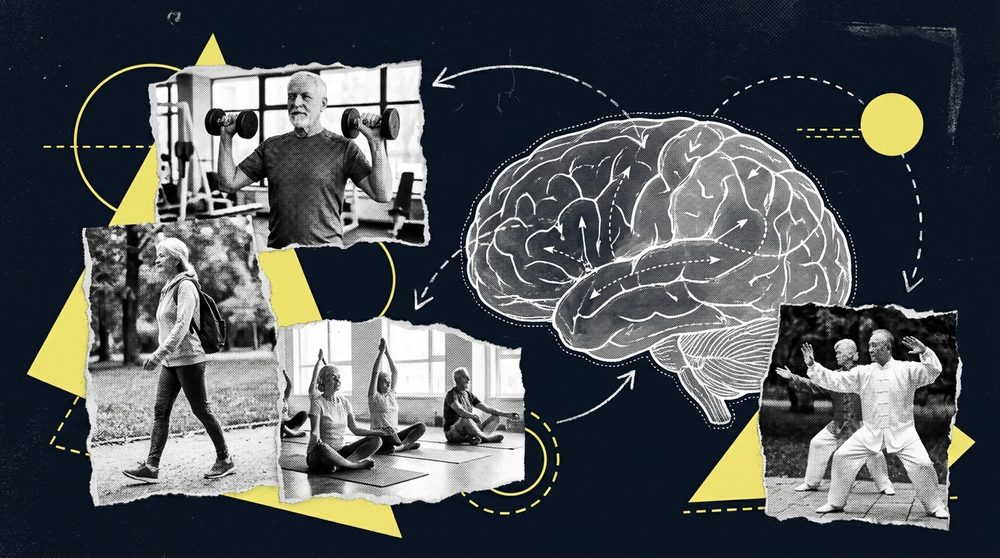
The research has been building for years, but a wave of longitudinal studies published in the past 18 months has shifted the scientific conversation from "exercise may help" to something significantly more direct: regular physical activity is the single most effective modifiable intervention for reducing dementia risk. More effective than any drug currently in trials. Cheaper than any clinical program. And available, right now, at your gym.
Most fitness operators have no idea what to do with this information. They're still selling abs and energy. The ones who figure it out first will tap into one of the most powerful purchase motivators in consumer health: the fear of losing your mind.
What the research actually says
The Lancet Commission on dementia prevention — updated in 2024 — identified physical inactivity as one of the 14 modifiable risk factors accounting for nearly half of all dementia cases globally. The evidence isn't from small studies. It's from meta-analyses of hundreds of thousands of participants across decades.
The specific mechanisms are increasingly well understood. Exercise increases BDNF — brain-derived neurotrophic factor — which promotes neurogenesis and synaptic plasticity. BDNF (Brain-Derived Neurotrophic Factor): BDNF (Brain-Derived Neurotrophic Factor): a protein produced in the brain that supports the growth, maintenance, and survival of neurons, and is strongly linked to learning, memory, and protection against cognitive decline. It reduces chronic inflammation, a key driver of neurodegeneration. It improves cardiovascular health, and cognitive decline tracks very closely with cardiovascular health. And it improves sleep quality, which is when the brain's glymphatic system clears the amyloid beta plaques associated with Alzheimer's.
"Physical inactivity is one of the most significant modifiable risk factors for dementia. Exercise isn't complementary to prevention — it is prevention."
— Lancet Commission on Dementia Prevention, 2024The types of exercise with the strongest evidence: a combination of aerobic training (Zone 2 cardio) and resistance training, done consistently over years, not weeks. Balance and coordination work — dance, yoga, martial arts — also show strong cognitive benefits, likely via the dual-task processing demands they place on the brain. It's not one category of exercise. It's consistent, varied, lifelong physical activity.
Which is exactly what a fitness studio is designed to provide.
The demographic opportunity
The population most worried about dementia is the same population most underserved by the current fitness studio model: adults 45 and over.
The millennial cohort — the generation that built boutique fitness into a $35 billion industry — is aging into their late 30s and 40s. The eldest millennials are turning 45 this year. They watched their parents and grandparents experience cognitive decline. They've read the research. They're asking harder questions about their long-term health than they were at 28 in a spin class.
They're also willing to pay more for answers. Longevity clinics — facilities offering NAD+ infusions, VO2 max testing, continuous glucose monitoring, DEXA scans — are growing at 25-30% annually and charging $500 to $3,000 per month. Functional medicine practices have multi-month waitlists. The demand for health optimization at this age is not a niche. It's a mainstream consumer shift.
Fitness studios are positioned directly at the intersection of this demand and the best-evidenced intervention available. The gap is in how they talk about it — and how they structure services around it.
The service layer play
There are two ways to capture this opportunity. The first is positioning: updating how you describe what you already do. The second is building actual service layers that create clinical partnerships and premium pricing.
On positioning: the shift from "get fit" to "protect your brain" is not a rebrand. It's an accurate description of what consistent exercise at your facility does. A strength training class that builds lean muscle and improves cardiovascular fitness is, by the evidence, reducing dementia risk. A studio that says so clearly — in its website copy, in its sales conversations, in the language coaches use during class — is not overpromising. It's being specific about outcomes that generic fitness marketing ignores.
On service layers: the more interesting opportunity is building structured relationships with practitioners who are already working with the longevity-conscious 45+ population.
Longevity clinics and functional medicine practitioners are actively looking for exercise referral partners. Their patients — people who have already paid for VO2 max testing or a metabolic panel — need an exercise protocol. Most clinics can't provide one. A studio that can demonstrate they understand the evidence — that they run programming appropriate for this population, that their coaches can have an intelligent conversation about training for cognitive health — becomes a trusted referral destination.
The referral model can be formal (revenue share, co-branded programming, integrated intake) or informal (practitioner trust, word of mouth, clinical network). Either way, it changes the customer acquisition cost math significantly — and brings a patient already primed to pay for outcomes, not access.
| Model | Structure | Revenue Impact | Complexity |
|---|---|---|---|
| Formal | Revenue share, co-branded programming, integrated intake | Higher — predictable volume, premium-primed clients | Higher — requires contracts and coordination |
| Informal | Practitioner trust, word of mouth, clinical network | Variable — dependent on relationship depth | Lower — no formal agreements required |
What programming actually looks like
The evidence points to a few specific program design principles for brain health:
Consistency over intensity. The cognitive benefits of exercise accrue over months and years, not weeks. Programming that keeps members coming back consistently — moderate intensity, sustainable load — matters more than periodic high-intensity events. The member who trains three times a week at moderate intensity for five years has a meaningfully different brain health trajectory than the one who does six intense weeks and burns out.
Strength training as a foundation. Resistance training specifically — not just cardio — has strong evidence for preserving hippocampal volume, the brain region most vulnerable to Alzheimer's-related shrinkage. Studios whose programming doesn't include progressive resistance training are missing a significant piece of the evidence base.
Dual-task and coordination work. Activities that require the brain to process multiple streams simultaneously — following choreography, coordinating movement patterns, responding to changing instructions — appear to have specific cognitive benefits beyond what steady-state exercise provides. This is good news for formats like dance fitness, martial arts-based training, and complex movement classes.
Social exercise. Group exercise — which most studios already provide — has its own independent cognitive benefit beyond the exercise itself. Social engagement is also on the Lancet Commission's list of modifiable dementia risk factors. A member who exercises in community twice a week is getting a compounded intervention.
The pricing and positioning shift
Operators who embed brain health into their core positioning can justify premium pricing — not because they're charging for something different, but because they're naming the value that was already there.
A $200/month membership at a studio focused on longevity programming, with coaches who can speak intelligently about exercise and cognitive health, is a different product in the customer's mind than a $200/month membership at a format studio with no stated health rationale. Same price. Different perceived value. Different conversion rate. Different retention.
The studios doing this best aren't necessarily the most scientifically rigorous. They're the ones who have built a consistent narrative — internal and external — that connects their programming to the outcomes their 45+ members actually care about.
The research did the hard work. The opportunity is in deciding to use it.
What does this actually mean for studio revenue?
The math is straightforward. Longevity clinics are charging $500–$3,000 per month and growing at 25–30% annually. Their patients need exercise protocols — and most clinics can't deliver them. A studio that speaks the language of brain health, runs programming built on the evidence, and formalizes referral relationships with practitioners isn't just adding a wellness angle. It's repositioning itself as a clinical-grade service in a market where clinical-grade pricing is already normalized. The revenue opportunity isn't marginal. It's structural.