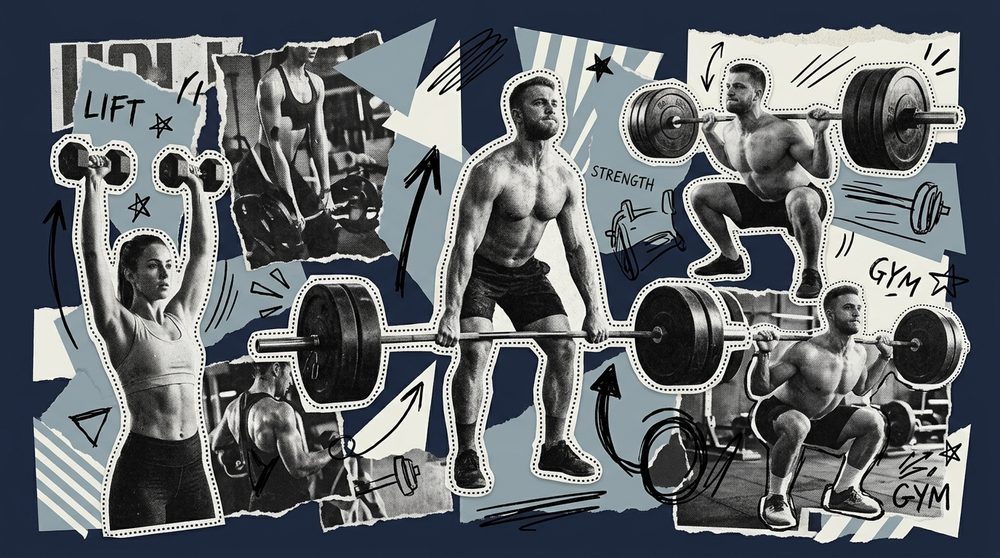
For two decades, "weight loss" was the default answer when a new member filled out a goals form. Trainers say that's no longer true. Across boutique studios and big-box gyms alike, the most common stated goal walking through the door now is some version of "get stronger" — build muscle, lift heavier, look capable rather than just smaller.
This isn't a vibe shift. It's a structural one, and it's being driven by two forces converging at the same time: a cultural move away from pure weight-loss messaging toward strength and longevity, and the rapid mainstreaming of GLP-1 medications, which are quietly making cardio-for-weight-loss programming obsolete for a growing share of the member base.
The GLP-1 variable nobody's programming for
GLP-1 drugs solve the weight loss problem pharmacologically. What they don't solve — and in fact actively risk — is muscle loss. Studies on GLP-1 users consistently show that a meaningful share of total weight lost is lean muscle mass, not just fat, unless the person is doing structured resistance training alongside the medication.
That creates a new category of member: someone whose weight is already trending down through medication, who now needs strength training specifically to preserve muscle, not to lose weight. Their goal isn't "burn calories." It's "don't lose the muscle I have, and build more." That member doesn't want a 45-minute cardio circuit. They want a coach who understands progressive overload and can build them a program around preserving lean mass. Progressive overload: Progressive overload: a resistance training principle in which the demands placed on the body are gradually increased over time — through added weight, reps, or volume — to continually stimulate muscle growth and strength gains.
The GLP-1 member isn't trying to disappear. They're trying to stay capable while their body changes around them. That's a completely different coaching brief than weight loss.
| Weight-loss era member | Strength era member |
|---|---|
| Goal: burn calories, shrink the scale | Goal: build muscle, stay capable |
| Medication: none (relies on exercise for deficit) | Medication: often on GLP-1, weight already trending down |
| Ideal format: cardio circuits, heart-rate zones | Ideal format: structured resistance training with progression tracking |
| Marketing that resonates: "burn 500 calories" | Marketing that resonates: "add 10 lbs to your squat this quarter" |
| Retention hook: motivation and momentum | Retention hook: medical necessity — preserving lean mass |
What "strength" actually means to this member
The shift isn't just about barbells. It's about a different relationship to the goal itself. Where weight-loss-era messaging was about subtraction — fewer calories, smaller numbers, less of you — strength-era messaging is about capability. Can you carry your own luggage. Can you get off the floor without using your hands. Can you still move well at 75.
This reframe matters because it changes what kind of programming and marketing actually resonates. A class built around "burn 500 calories" speaks to the old goal. A class built around "add 10 pounds to your squat this quarter" or "build the strength to keep up with your kids" speaks to the new one. Studios still running their entire marketing calendar around calorie burn and the scale are increasingly out of step with what their own members say they actually want.
What to actually change in your studio
The class mix audit comes first. Pure cardio formats — spin, bootcamp circuits built around heart-rate zones — aren't going away, but they're no longer the growth lever they were five years ago. The format gaining ground is structured strength: small group resistance training with real progression tracking, not just "lift something heavy for 45 minutes." Members in the strength-first era want to see a number go up — more weight, more reps, a heavier deadlift than last month — the same way runners want to see a faster mile.
Instructor coaching cues need to shift too. A coach trained to motivate around calorie burn and sweat isn't automatically equipped to coach progressive overload, form under fatigue, or how to scale a lift for someone three months post-GLP-1 with reduced muscle mass. That's a real training gap, not just a messaging tweak.
And the marketing language has to catch up last. Every piece of copy that still leads with "lose weight," "burn fat," or "shed pounds" is talking to a goal a growing share of your prospective members no longer have. The studios that get ahead of this — that retool their Instagram captions, their intro offer copy, their onboarding conversation around strength and capability instead of the scale — are the ones who'll capture this wave before it becomes obvious to everyone.
Strength training didn't replace weight loss as a gym goal by accident. It replaced it because the underlying problem changed — partly cultural, partly pharmacological. The studios paying attention to why their members' goals shifted, not just that they did, are the ones who'll build the next five years of retention around it.
Why does the GLP-1 shift actually change your retention strategy?
Because GLP-1 members aren't a trend — they're a permanent new cohort with a fundamentally different reason to stay. A member losing weight pharmacologically doesn't need your studio to solve the scale problem. They need it to solve the muscle-loss problem. That's a retention hook built on medical necessity, not motivation. Studios that build programming, coaching language, and onboarding around preserving lean mass for this member will retain them far longer than studios still selling calorie burn to someone whose medication already handles that job.