Oura set the terms of its IPO this week. The headline number is big: up to $2.2 billion raised, at a valuation of about $15.6 billion.
Then you read who is selling.
Where the $2.2 billion actually goes
Fifty million shares are on offer at $40 to $44. Oura is selling 13.5 million of them. Existing shareholders are selling the other 36.5 million.
So most of the money never touches the company.
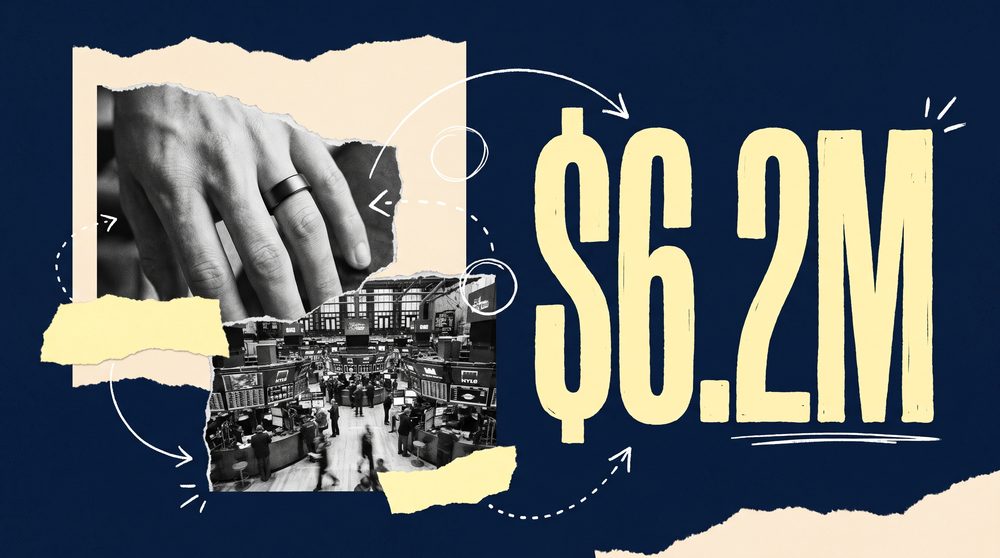
The part worth sitting with is in Oura's own filing. It expects net proceeds of $532.6 million. Of that, $526.4 million covers tax owed on employee stock grants that vest the moment the company lists. What is left for general corporate purposes is about $6.2 million.
That is not our arithmetic. That is the use-of-proceeds section of the filing.
A $15.6 billion listing that puts about $6 million of working capital into the business.
Why does a $2.2 billion IPO leave the company with $6 million?
Because this is mostly a secondary sale, which means existing owners selling shares they already hold rather than the company issuing new ones. Money from a secondary sale goes to the seller, not the business. Oura is selling only about a quarter of the shares on offer. Almost all of that is spoken for by a tax bill that exists only because the company is listing. Oura also already held $372 million in cash, so it did not need the money.
None of this is unusual or improper. Plenty of good companies list this way, and a tax bill on vesting stock is a real obligation. It just means the IPO is doing a different job than the headline suggests. It is not fuel for the next phase. It is a door being opened for the people who got in early.
The investor selling everything
Forerunner Ventures owns 9.3% of Oura and is selling all of it. That is about 28.7 million shares, worth roughly $1.20 billion at the midpoint price, before fees and tax.
Forerunner's shares account for close to 80% of everything existing shareholders are selling in the deal.
| Who | Shares sold | Roughly what they receive |
|---|---|---|
| Existing shareholders | 36.5 million | About $1.53 billion |
| Oura, the company | 13.5 million | About $567 million gross |
| Oura, after the tax bill | About $6.2 million |
An early investor selling its entire position is not automatically a verdict on the company. Funds have their own timelines and their own investors to pay. But it is worth noticing which way the most experienced money in consumer wellness is walking.
What this means if you run a gym or studio
Your members' rings are about to be owned by public shareholders. That changes the pressure on the thing they pay for every month.
We looked at Oura's S-1 earlier this month and the shape of the business was clear: the hardware gets you in, the membership carries the margin. A public company has to defend that margin in front of investors every ninety days.
It has to do that in the same quarter Apple made a readiness score free at the operating system level. A paid subscription that competes with a free feature is a hard story to tell on an earnings call.
Two practical consequences. First, expect more partnership and bundling offers pointed at operators, because distribution through gyms is cheaper than buying members one at a time. Read those deals as what they are, a way of defending a subscription, and price your side accordingly.
Second, do not build a service on top of someone else's subscription staying where it is. We made that point when Lilly took a stake in Oura: the measurement layer is commoditising, and the part nobody can take from you is the interpretation. Someone in your building who reads the number and tells a member what to do about it on Tuesday is worth more than the number.
The device your members trust is now a quarterly earnings story. Plan for the price of it to move.