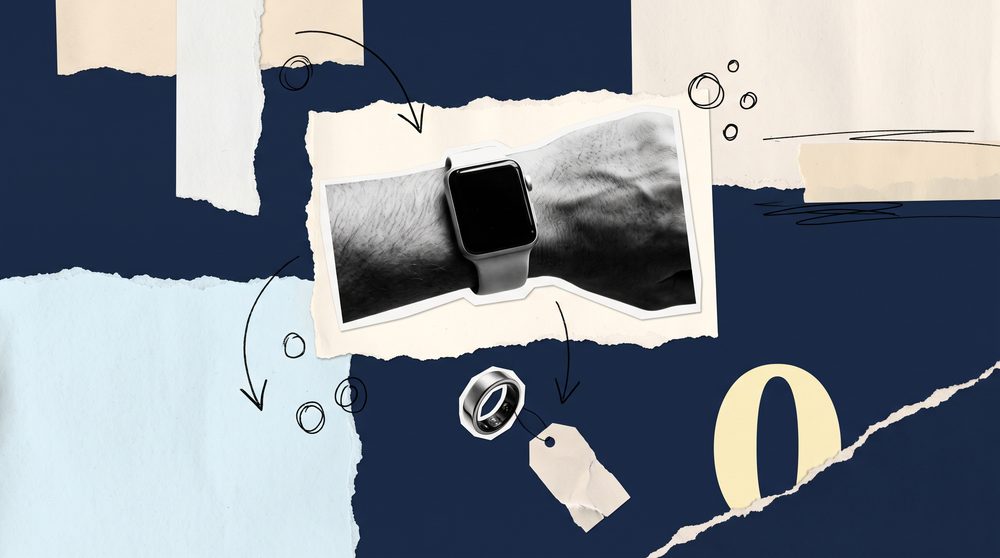
Oura filed to go public on September 3 at a target near $16 billion. Its pitch to the market was the membership: $240.5 million in subscription revenue over nine months, growing 121%, at an 89% gross margin. Six days later, Apple made the core of that product free.
Apple announced a new Health Sensing System on Apple Watch Series 12 and Ultra 4. Heart rate is now sampled every five seconds. HRV (Heart Rate Variability), the beat-to-beat variation that every recovery score is built on, is sampled every five minutes, which Apple says is 24 times more often than the previous generation. On top of that data it built Readiness: a daily 0 to 10 score that tells the wearer to Recover, Pace Yourself, get Ready, or Go For It.
That is the Oura membership. That is the WHOOP subscription. Apple is charging nothing for it.
The price gap is not subtle
| Apple | Oura | WHOOP | |
|---|---|---|---|
| Daily readiness or recovery score | Included | $5.99/mo | $199 to $359/yr |
| Annual cost of the software | $0 | $69.99 | $199 to $359 |
| Longevity or biological age score | Included | Included in membership | Included in membership |
| Blood biomarker panel | $119 at Quest | Not offered | Sold separately |
| Requires buying the hardware | Yes | Yes, plus the fee | Bundled |
Apple did not stop at recovery. The redesigned Health app adds a Longevity tab and a Health Age that scores a user against their chronological age using VO2 max, resting heart rate, sleep and HRV. It adds Movement Evaluations, at-home assessments of flexibility, strength, balance and movement mechanics run through the iPhone camera and the Watch. And it adds Lab Tests: 50 or more biomarkers for $119 at roughly 2,000 Quest Diagnostics locations in the US.
Three weeks ago we covered WHOOP selling bloodwork without the band, and read it as the moment the interpretation layer became the product. Apple has now done the same thing at a lower price with a national lab network attached, and it did not need to sell anyone a strap first.
The interpretation layer was supposed to be the moat. Apple made it a default setting.
The Run RateWhat does Apple's free readiness score mean for gyms and studios?
It means the number stops being a differentiator and becomes an input. Most members with a recent iPhone and Watch will have a readiness score within weeks, whether or not they ever bought a wearable. Any studio planning to sell recovery tracking as a premium tier has lost the product. What operators can still charge for is the response: programming that changes when the score drops, a coach who reads it out loud, and a schedule flexible enough to act on it. Apple supplies the reading. Nobody has automated the intervention.
The subscription thesis just got a stress test
When we wrote about Oura's IPO filing last week, the argument was that a $5.99 recurring fee at an 89% margin across five million members is worth more than the ring that acquired them. That argument still holds on the numbers. It holds less well on the moat. An 89% gross margin is defensible for exactly as long as the thing behind it is scarce, and readiness stopped being scarce on Tuesday.
WHOOP is the more exposed of the two. Oura at least sells a piece of jewellery people want on their finger. WHOOP sells a screenless strap whose entire value is the interpretation, at $199 to $359 a year against a $0 competitor that ships on hardware people already own for other reasons. We made a version of this argument in July when Garmin went after the hardware margin. Apple has now gone after the other half.
What operators should do before watchOS 27 lands
watchOS 27 ships September 14. The Health app rewrite arrives later this year. That gives most operators a few weeks before members start walking in with a Health Age they did not ask for and do not understand.
Three things are worth doing now. First, decide what your trainers say when a member shows them a 3 out of 10. A readiness score with no coaching attached mostly produces anxiety, which is the pattern we found when we looked at what readiness scores actually tell members. Second, stop quoting recovery tracking as a paid add-on in any tier sheet, because that line is about to read as a charge for something free. Third, look hard at the intake assessment. If your onboarding is a movement screen and a body composition reading, a phone camera now does a version of both, and the part you are really selling is the conversation afterwards.
The wearable companies spent five years teaching consumers to pay monthly for a number. Apple spent one keynote teaching them not to. Operators who built a service around the number should assume the same lesson is coming for them.