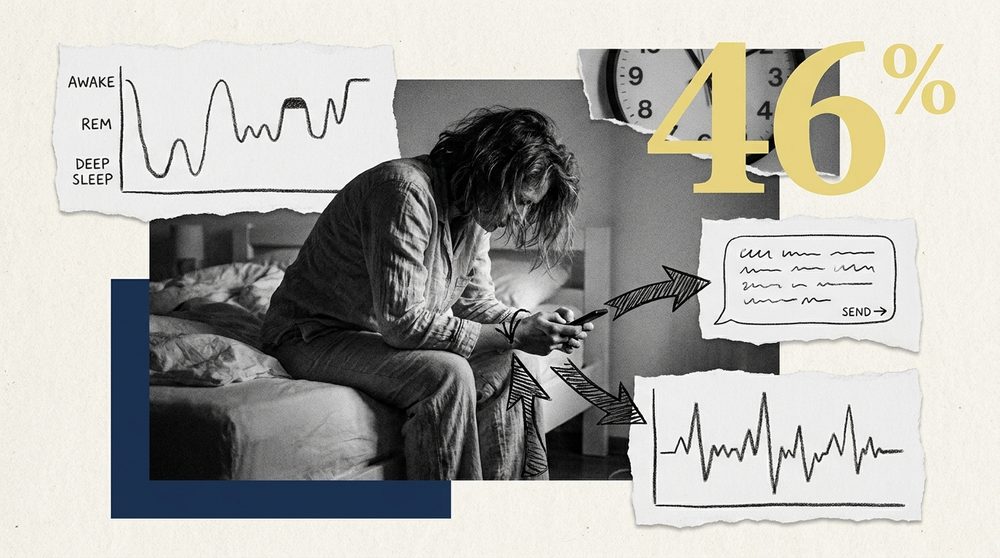
The Wall Street Journal has given a name to something your members were already doing. Datamaxxers, as the paper christened them, are people who export the output of their wearables into an AI chatbot and ask it to explain what the numbers mean. The trend has since been picked up widely across consumer tech coverage.
They do this because the device will not. A ring or a strap will tell a member that recovery is down and sleep was worse than usual. It rarely tells them why, and almost never tells them what to do about it this week.
The gap is real and it has been measured
This is not a fringe complaint. A 2026 study in Nature Communications, Transforming wearable data into personal health insights using large language model agents, found that wearable platforms are competent at producing summaries and considerably weaker at answering personalized questions about an individual's own data. The researchers built an agent, PHIA, specifically to close that gap, testing it against questions of the form a member would actually ask. Something like what is contributing to poor sleep quality over the past week, and what could be done about it.
The device manufacturers know. Oura reports that 60% of people who tested Oura Advisor said it helped them understand metrics they had not fully grasped before. Google Health Coach is the same product thesis under a different logo. Datamaxxing is the do-it-yourself version, built by members who did not want to wait for the feature.
The wearable supplies the number. The chatbot supplies the meaning. The studio, in most cases, supplies neither.
— The Run RateWhat does a datamaxxer already know when they walk into your studio?
More than almost any member did five years ago. They know their resting heart rate baseline and when it deviates. They are fluent in HRV (heart rate variability, a measure of the variation in time between heartbeats, used as a proxy for nervous system recovery) and sleep debt. They arrive with a hypothesis about why last week went badly, usually a correct one. They have done the single hardest part of behaviour change already, which is caring enough about the number to look at it every morning.
The scale here is not niche. Rock Health's consumer survey puts wearable ownership at 46% of US adults, with 57% owning at least one wearable or connected health device. Apple accounts for 63% of that install base, followed by Fitbit at 27%, Samsung at 16%, Garmin at 8% and Oura at 6%. Any studio with 200 members is already serving a meaningful population of people who track, and a growing subset of those are now interpreting.
What the member self-serves, and what they cannot
| A chatbot handles this well | Only your studio can supply this |
|---|---|
| Explaining what a recovery score means | Watching how the member actually moves |
| Spotting a pattern across four weeks of sleep | Changing today's session based on it |
| General guidance on training load | Load progression against a known injury history |
| Answering at 6am, instantly, for free | Someone who notices when they stop showing up |
How operators can use a better-informed population
The instinct is to treat this as disintermediation, another layer of the coaching relationship leaking to software. That reading misses what is actually happening. The interpretation work members are doing for free is work studios were never doing for them anyway, and it produces a member who is easier to coach, not harder.
Three practical moves:
Ask the question at intake. Add one line to your onboarding form: what do you track, and what does it tell you? You will learn more about a new member's motivation from that answer than from a goal-setting conversation, and you will find your datamaxxers immediately. They are usually your most committed cohort.
Let the data change the session. A member who tells you their recovery has been suppressed for four days is handing you a programming instruction. Acting on it is the moment they understand what a coach does that an app does not. We made this case in detail in why readiness scores are telling your members they are overtraining.
Do not compete on interpretation. You will lose. The chatbot is free, instant and available at 6am. Compete on the things that require presence: correction, progression, accountability and the social layer. The interpretation layer is becoming infrastructure, which is the same conclusion we reached when Eli Lilly bought a piece of Oura and when ChatGPT, Gemini and Samsung all became health coaches in the same week.
A member who already knows their own data can finally have a specific conversation with you. Most studios have not built the intake, the programming loop or the coach training to have it.