Ask a studio owner what they make of members walking in glued to a WHOOP or an Oura ring, and you'll usually hear some version of the same fear: the readiness score is going to become a permission slip to skip. "My ring says I'm not recovered" is the new "I forgot my shoes."
The research suggests that fear is aimed at the wrong problem.
Are wearable readiness scores actually making members skip workouts?
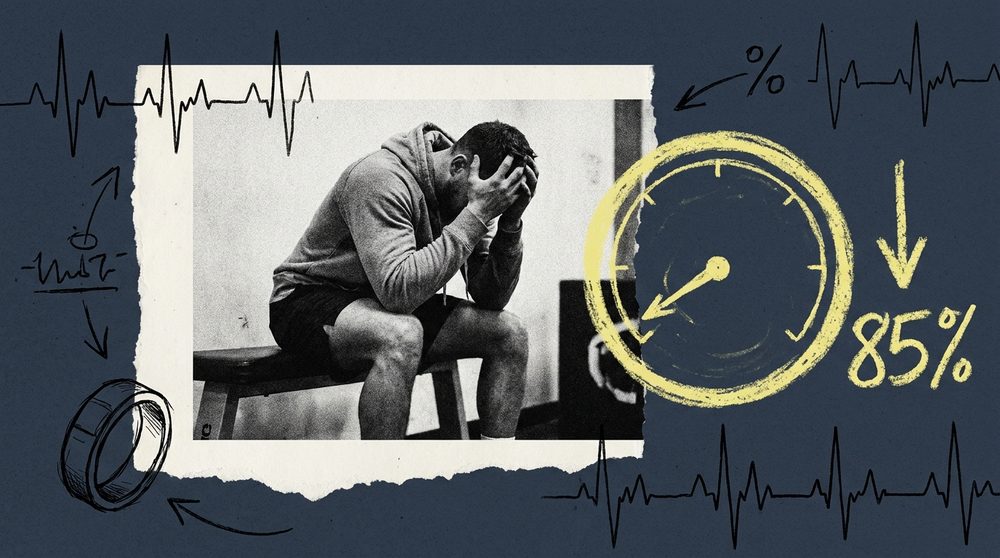
Rarely on their own. In a study of recreational runners, a decline in readiness-to-train combined with elevated nocturnal heart rate distinguished genuinely overreached athletes from recovered ones with 85% or greater predictive accuracy. In other words, when the score says "not recovered," it is usually correct. The problem isn't that members are inventing excuses — it's that the device tells them they're tired without telling them what to do instead.
And here's the part operators miss: the members most fixated on their scores — the optimizer segment, the ones with the ring and the strap and the spreadsheet — are frequently the ones overtraining. The instinct that makes someone buy three recovery devices is the same instinct that makes them train through fatigue. So the readiness score isn't producing lazy members. It's surfacing a population that's quietly overreaching and doesn't know how to back off intelligently.
What does a readiness score leave unanswered?
The only question that matters: what should I do today? A number without a prescription creates two failure modes, and both hurt a gym. The member either skips entirely — the fear operators already have — or overrides the score, trains hard anyway, and digs deeper into overtraining. Neither builds the habit a studio depends on. HRV (Heart Rate Variability) — the variation in time between heartbeats, used as a marker of recovery — can flag the problem, but flagging isn't prescribing.
| Readiness reading | What most members do | What an operator can prescribe |
|---|---|---|
| Low (overreached) | Skip, or override and overtrain | Deload, mobility, or easy zone 2 |
| Moderate | Guess | Moderate volume, technique work |
| High (recovered) | Sometimes still skip | Green light for intensity or a PR attempt |
This is exactly the space the smartest training systems are moving into. Research on experienced cyclists found that training prescribed by HRV and readiness scores can outperform a fixed plan — the gain isn't in measuring recovery, it's in acting on it. Personalized heart-rate-based cardio systems, including newer entrants building a "personalized cardio" category around exactly this problem, are betting that the prescription — not the measurement — is the product.
How should gyms turn a readiness score into retention?
Become the interpretation layer the device can't be. The wearable measures; the operator prescribes. When a member walks in showing a low score, that's not a lost session — it's the single best moment to prove your value: "Great, today we do zone 2 and mobility, not the 6am HIIT class." Do that consistently and the readiness score stops being a reason to stay home and becomes a reason to come in and ask what to do.
We've argued before that as sensors commoditize, interpretation is the last unowned layer — the ring was never the point. The same logic that made Garmin's cheap hardware a threat to margins but not to coaching applies on your gym floor. Measurement is a commodity now. Telling a specific human what to do with their specific number, today, is not. That's the job the device hands you for free — and the operators who take it will own the members the optimizers can't optimize on their own.