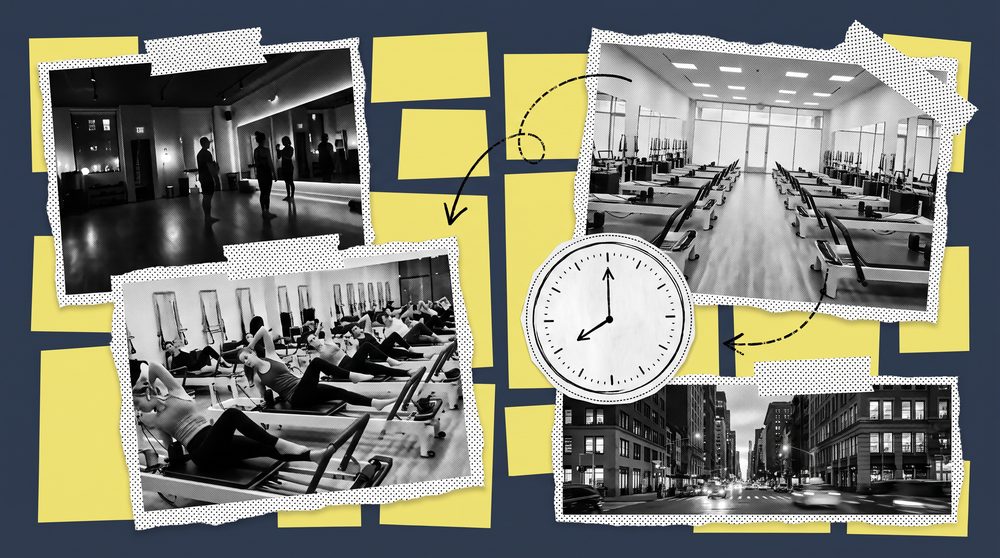
ClassPass just put a number on something operators have been sensing for two years. In research covered by Forbes on August 19, the marketplace found that 53% of its users aged 18 to 34 booked a workout instead of a night out in the past year. Another 51% suggested a class to friends rather than drinks. And 44% said they made new friends through a class they booked.
Those are good lines for a trend piece. The number that should change your schedule is quieter and sits further down: reservations for Friday and Saturday classes between 7pm and 11pm more than doubled from 2023 to 2025.
Demand moved into hours most studios had already given up on.
Why do studios still treat Friday night as off-peak?
Because the schedule was built before the demand moved. Most studio timetables still assume a 2015 member: weekday mornings before work, weekday evenings after work, and a couple of weekend morning slots. Friday and Saturday nights were competing with bars and restaurants, so operators stopped fighting for them. The ClassPass data says that competition is now going the other way, and the schedule has simply not caught up.
The cost of not catching up is specific. A class slot is perishable inventory: it expires the moment it passes, and an empty 8pm Friday costs exactly what a full one costs in rent, utilities and, if you staffed it, labour. This is RevPASH (Revenue Per Available Seat Hour), a metric hospitality has used for decades to judge whether a room is earning its keep hour by hour. Fitness borrowed the studio format from boutique retail and the class format from group exercise, but it never really borrowed this.
The spread inside a single week is wider than most operators think. Scheduling vendors put typical off-peak utilization at 50% to 60%, and fitDEGREE reports reformer slots running at 98% utilization at 6pm while the 10am sits at 45%. Analysis of Pilates scheduling puts the healthy benchmark at 70% to 75% filled, with a majority of studios operating underneath it.
The three slots are not the same problem
Lumping every underfilled hour into one bucket called off-peak is what produces the blanket discount, and the blanket discount is what quietly caps revenue. The hours behave differently, so they should be priced differently.
| Slot | What the demand is doing | Common treatment | What it actually supports |
|---|---|---|---|
| Tuesday 6pm | Saturated, often waitlisted | Standard rate | Premium rate, or a second instructor |
| Tuesday 10am | Genuinely soft | Standard rate, runs half empty | Off-peak membership, or convert to semi-private |
| Friday 8pm | Doubled since 2023 | Not on the schedule at all | Full rate, programmed as an event |
The Friday row is the one worth acting on this month, because it is the only one where you are not choosing between price and volume. You are choosing between some revenue and none.
Program it like a venue, not a class
If 44% of under-35s are making friends in your room, the thing they are buying at 8pm on a Friday is not the workout. Barry's has already tested this directly, running a Valentine's event called Sweat Your Heart Out rather than simply adding a class to the grid. That distinction matters: an event has a reason to exist, a name, and a reason to bring someone. A class at an unusual time is just a class at an unusual time, and it will underperform and then get cancelled, which is how most studios conclude that weekend nights do not work.
The playbook here is closer to what we described when BFT turned its gym floor into a ticketed venue: same four walls, same members, a different revenue line because the occasion changed. The pricing question underneath it is the one we worked through in how to price a boutique studio without racing to the bottom, and the answer does not change just because the clock says 8pm.
There is a defensive reason to move too. The demand signal in that Forbes piece is not yours. It belongs to ClassPass, which can see the shift across thousands of studios before any single operator can see it in their own booking data. We have already watched that marketplace widen into movies, smoothies and coworking once it had the leverage. If weekend social fitness becomes a category, the marketplace will package and sell it, and the studios that never programmed the hour will be buying their own members back.
You already pay rent on Friday at 8pm. The only open question is whether anybody is in the room.