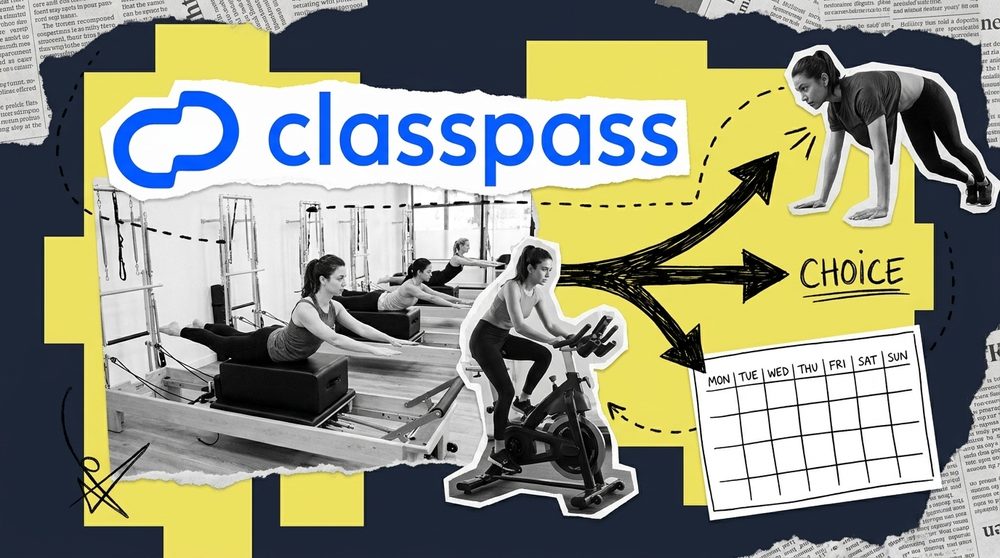
A new report from the Fort Worth Star-Telegram made a case that sounds like a ClassPass press release but isn't: the platform has become the easiest way for people to stick to a workout routine. Their data shows members who build a DIY schedule — two Pilates sessions, one cycling class, two HIIT workouts per week — are outperforming traditional gym members on consistency.
ClassPass is growing. But that's not the real story.
What's actually happening
Boutique fitness now accounts for more than 35% of the total fitness market, up from a fraction of that a decade ago. That number didn't grow because ClassPass happened — it grew because boutique formats work. The variety, the instruction quality, the community. ClassPass just removed the friction between a consumer and that product.
Here's the insight buried in the consistency data: the 2+1+2 DIY routine is functioning as a gym membership for a segment of consumers. Not a supplement to a membership. A replacement. Two Pilates on Tuesday and Thursday, one cycling class Wednesday, two HIIT sessions Monday and Friday. That's a weekly training structure — and ClassPass is the platform that holds it together.
What ClassPass actually built isn't a discovery marketplace. It's a commitment device that doesn't require commitment to any single brand. commitment device: Commitment device: a system or structure that locks a person into a desired behavior by raising the cost of deviation — in behavioral economics, it's how people override future temptation by making a decision in advance.
What ClassPass actually built isn't a discovery marketplace. It's a commitment device that doesn't require commitment to any single brand.
Why that reframe matters
If you think about ClassPass as "a booking platform that steals your customers," you'll fight it defensively — negotiate better rates, restrict your availability, try to convert ClassPass users to direct members. Some of that is rational. But the frame is wrong.
The deeper truth: the consumer who builds a 5x/week routine across your platform and two others is a more valuable fitness customer than the average direct member. They're highly engaged. They're fitness-first. They have disposable income and revealed preference for boutique quality.
The question isn't whether to fight ClassPass. It's whether you've built your studio experience to be worth showing up to repeatedly, even when that consumer has other options. The studios that make ClassPass users want to come back — and eventually convert — are the ones that deliver a consistently excellent product. The studios that lose them are the ones hoping that removing ClassPass forces a conversion. It doesn't. It forces a competitor.
Optionality is a consumer product now
Here's the shift that's hard to sit with: some percentage of your ideal customer will never buy a single-studio membership again. Not because they're disloyal, but because their fitness life is genuinely multi-modal. They want Pilates and cycling and HIIT. No single studio provides all three.
For those consumers, the choice isn't your studio vs. ClassPass. It's your studio + ClassPass vs. a competitor + ClassPass. You're not competing for exclusivity. You're competing to be the preferred anchor of a diversified routine.
That changes how you think about pricing, pack design, and experience. The studio that wins with the optionality consumer is the one with the clearest identity within the mix — the place in their week that feels irreplaceable, even if it's not the only place.
Three moves
1. Design a "ClassPass gateway" experience. Your first-visit experience for ClassPass users should be built explicitly to convert. Not a hard sell — a high-quality intro that makes the cost of not coming back feel higher than the cost of buying a membership. Most studios run the same class for ClassPass visitors as everyone else. That's a missed conversion.
2. Track your ClassPass-to-member conversion rate. Most operators have no idea what it is. It's one of your most important acquisition metrics. If it's under 15%, your first-visit experience has a problem. If it's over 30%, ClassPass is effectively your top acquisition channel and you should treat it like one.
| ClassPass-to-Member Conversion Rate | What It Signals |
|---|---|
| Under 15% | Your first-visit experience has a problem — ClassPass users aren't seeing enough reason to return on their own dime |
| 15–30% | Solid performance; ClassPass is functioning as a meaningful acquisition channel worth optimizing |
| Over 30% | ClassPass is effectively your top acquisition channel — treat it like one with dedicated conversion strategy |
3. Accept that optionality is now a product feature, not a threat. Studios that lean into this — offering day passes, flexible packs, even ClassPass integration as a positioning tool ("discover us here, stay for this") — will outperform those that treat every non-committed consumer as a loyalty failure.
What to watch
ClassPass's long-term bet is that it becomes infrastructure for boutique fitness — the booking layer that the category runs on. If that happens, the power shifts toward platform and away from individual studios. The counter-move is brand. A consumer with a strong attachment to your identity doesn't think of you as "a ClassPass option." They think of ClassPass as "the way I found my studio." That's the difference worth building toward.
What does the optionality shift actually cost you if you ignore it?
More than a few lost memberships. The consumer who builds a 5x/week multi-studio routine isn't going away — they're becoming the dominant profile of the highly engaged boutique fitness customer. Studios that treat this segment as a loyalty failure will keep optimizing for a conversion that was never coming. The ones that adapt — sharper identity, better first-visit design, real conversion tracking — will capture disproportionate brand equity inside a fragmented consumer routine. Boutique fitness is 35%+ of the market and still growing. The question is whose name those consumers say when someone asks where they work out.
Sources
- "Why ClassPass Has Become the Easiest Way to Stick to a Workout Routine" — Fort Worth Star-Telegram, 2026
- IHRSA — boutique fitness accounts for 35%+ of US fitness market
- ClassPass platform data, Q1 2026