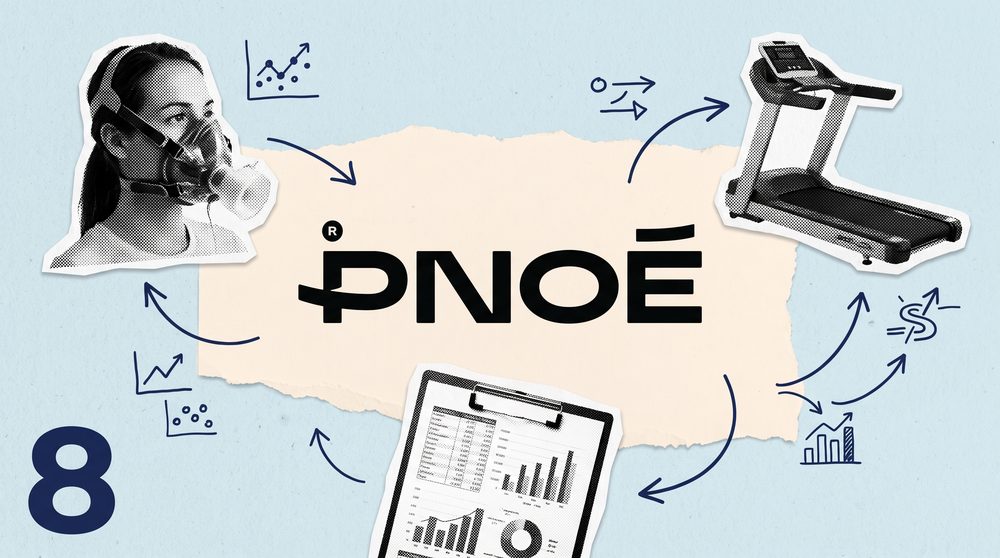
PNOĒ is launching a version of its metabolic testing mask that nobody has to supervise. It goes live on October 1, as reported by TechCrunch. A member walks up, puts the mask on, presses a button, sits down and breathes for eight minutes. That is the whole test.
The old version worked fine. It just needed a trained person standing next to it for the duration. That one requirement is why metabolic testing has stayed a boutique service in a handful of clubs instead of something you can actually run at scale. Staff time is the most expensive thing in your building, and you cannot sell a $150 test that costs you forty minutes of a coach's day.
So the gate came off. The question now is what you do with it, and the honest answer is that most operators will get this wrong by treating it as a revenue line.
What does self-serve metabolic testing actually cost a gym?
PNOĒ charges fitness and wellness businesses a subscription between $400 and just over $1,000 a month, which covers the hardware, the software, training and marketing materials. The company sells only to businesses, so you set what members pay. The device reads oxygen and carbon dioxide in exhaled breath and reports 23 biomarkers, including VO₂ max (maximal oxygen uptake), the ceiling on how much oxygen your body can use during hard effort. Hardware electronics detach, so one analyser serves the club while each member keeps their own mask.
Run that as a straight ancillary and the maths is dull. At the bottom of the range you need to sell somewhere around ten to fifteen tests a month before the subscription clears, depending on your price. That is achievable and it is also not interesting. You have added a service that pays for itself and changed nothing else about the business.
The retest is the actual product
A metabolic test is a transaction. A retest is a calendar entry.
Physiology does not move in a week. A meaningful change in aerobic capacity takes roughly eight to twelve weeks of consistent work, which means every test you sell comes with a natural return date attached, and a reason to come back that has nothing to do with willpower or a discount. The member is not being retained. They are waiting to find out if the number moved.
That window matters more than it looks. We wrote last week about why selling a course instead of a class pack changes first-month retention, and the mechanic is the same one. A class pack is credit. A course has a shape, a start and an end. A baseline test with a booked retest turns an open-ended membership into something with a finish line the member actually cares about.
| Treating it as | What you sell | What you measure | What it does to churn |
|---|---|---|---|
| A revenue line | One test, $99 to $199 | Tests sold per month | Nothing |
| A retention mechanic | Baseline plus a booked retest in 10 weeks | Retest completion rate | Gives the at-risk window a reason to end well |
Our retention benchmark guide puts the danger zone in the first ninety days. A ten-week retest lands inside it, which is the only piece of timing here that really matters.
Who already has this
PNOĒ is in almost every Equinox club, plus Four Seasons hotels, Red Bull, the NBA, Mount Sinai and Restore Hyper Wellness. The company has raised around $22 million and says it is growing more than 100% a year.
That list tells you where this sits today and where it is heading. Measurement started as a premium differentiator, and premium differentiators do not stay premium. Your members are already carrying numbers into the building. Apple Watch and WHOOP estimate VO₂ max passively from a walk or a run, and training systems like Morpheus build adaptive heart-rate zones on top of daily recovery data. We covered the demand side of this in July when VO₂ max turned up in British Vogue. The number is already in the conversation. The only question is whether your club is the place that measures it properly or the place that shrugs at it.
What to do about it
If you are considering this, price the retest before you price the test. Sell them as a pair, book the second appointment at the first one, and judge the whole thing on retest completion rather than on tests sold. If you only track the top-line number, you will conclude in six months that metabolic testing is a modest ancillary revenue stream, and you will be right, because that is all you asked it to be.
One more thing worth planning for. A lab-grade result will sometimes disagree with the estimate on the member's wrist. Decide now who handles that conversation and what they say, because it will happen in week one.