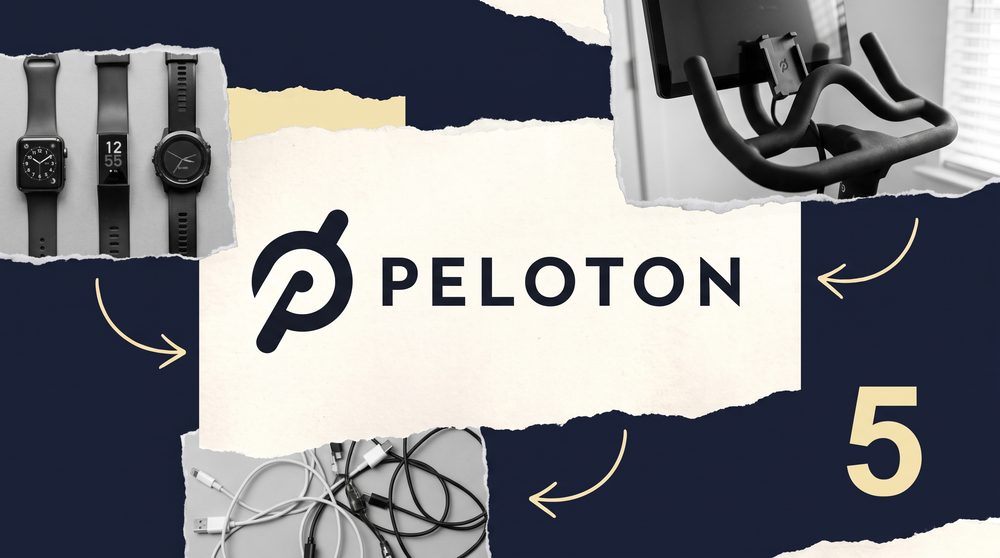
Peloton has decided it will not build a wearable. On its most recent earnings call, chief executive Peter Stern said the company would work with the devices members already own instead, and described the position as playing Switzerland.
From November 6, data from those connected apps and devices starts feeding what Peloton shows members. Garmin, WHOOP, Apple Health and Fitbit data will be used to personalise insights, recommendations and workouts.
One caveat on the date, stated plainly. It comes from an email Peloton sent to members, reported by Peloton Buddy, which quotes the subject line directly. Peloton has not published an updated privacy policy covering it and has not announced it publicly. The strategy behind it is on the record from the chief executive. The November 6 switch-on is reported rather than confirmed.
Why would a hardware company stop making hardware?
Because the wrist is taken. Apple, Google, Garmin, WHOOP and Oura are already there, and every new entrant pushes the margin down further. Building a sixth tracker would cost Peloton real money to win a category somebody else already owns. Reading all five costs very little and makes Peloton the place the data lands. Selling devices is a race to the bottom. Being the layer everything reports into is a position.
Peloton has been assembling this for most of the year. Apple Health, Garmin Connect and Fitbit integrations went live in March, with Garmin running both ways so Peloton workouts count toward Garmin training load. A two-way WHOOP integration followed in September. Stern said on the call that more are coming.
The mechanic matters for how much data actually moves. It is opt-in (the member has to switch on the specific data category and leave Personalized Experience enabled), and either switch turns it off again. So Peloton gets a slice of its members, not all of them, and has to keep asking.
You already have the data Peloton is going to this trouble to borrow
Here is the part worth sitting with. Peloton is building integrations, sending privacy emails and negotiating with five device makers because it cannot see its members between workouts. It has no idea who is drifting until they stop logging in.
You do not have that problem. Your booking system already knows.
| What Peloton is wiring up integrations to approximate | What your booking system already holds |
|---|---|
| Resting heart rate drifting up on Garmin | The member who went from three visits a week to one |
| Poor recovery scores from WHOOP | The member who stopped booking the class they never missed |
| Activity logged outside Peloton via Apple Health | The member who mentions the other gym at the front desk |
| Sleep trends over several weeks | Who your coaches say looks flat, if anyone writes it down |
The second column is better data, and you did not have to ask permission for any of it. It is first-party, it is specific, and it is about attendance, which is the thing that actually predicts whether somebody stays. We have written before about growing revenue from the members you already have, and this is the input nobody uses.
Most operators run the report that says how many visits happened last month. Almost nobody runs the one that lists, by name, the twenty members whose pattern changed in the last three weeks. That list takes a query you already have the data for, and it is the closest thing in this business to knowing the future.
What to do this month
Pull the drop-off list. Members whose visit frequency fell by half over three or four weeks, by name, from your own system. Then have an actual person contact them, not an automated win-back email, because the automated email is what the apps are already doing and it is the part they do better than you.
The Peloton move is a reminder of what platforms are short of. Google now charges a subscription for a metabolic trend inferred from a wristband. Peloton is wiring up five device makers to find out whether a member is drifting. Both are expensive ways to reach for something you can see from the front desk, for free, if you look.
Peloton is building a business on data it has to ask permission for. Yours is sitting in your booking system, already yours, and mostly unread.