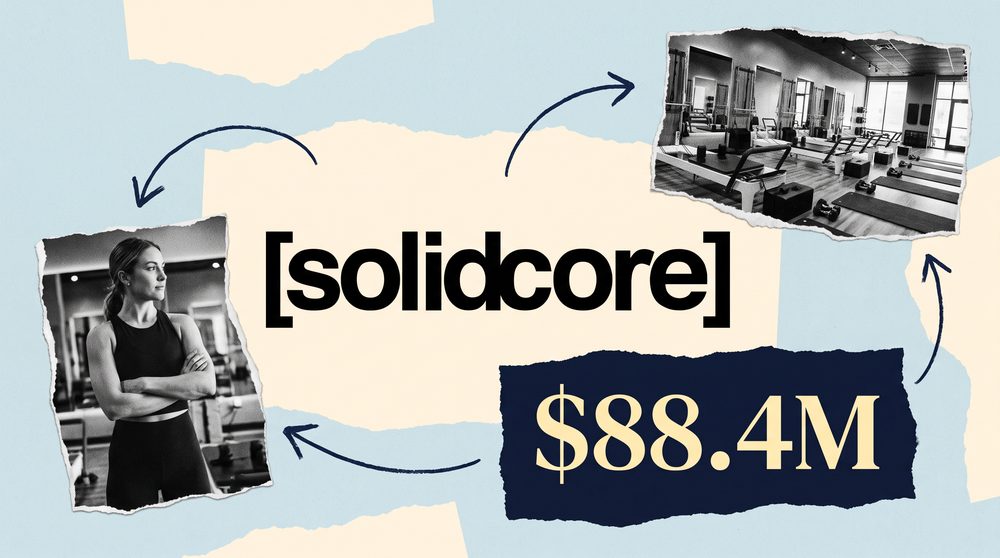
Solidcore is launching its first new workout in 13 years. The woman who built the company says that is a mistake, and one of her reasons is sitting in your maintenance folder right now.
Anne Mahlum founded Solidcore in 2013, ran it until 2021, and sold her majority stake to Kohlberg & Company for $88.4 million in 2023. She took another $10 million when L Catterton bought the business in September 2024, in a deal that valued it between $600 million and $700 million. She holds no shares and no board seat. She posted her objections to the new format on Instagram anyway, then expanded on them to Inc. on October 23.
Start with the caveat, because it is hers. Mahlum told Inc. she no longer sees Solidcore's internal numbers and has no idea what leadership is reading on utilisation or the financial health of the business. She is arguing from outside the building. "Obviously I know I don't have a say in things and a formal say as an owner, but I'm always going to have an opinion as a founder."
The brand argument, and the one that travels
Much of her criticism is brand argument, and you can take it or leave it. Solidcore is already strength training, she says, so selling members a separate strength format tells them the thing they bought was incomplete. "It's easy to break trust when you're telling people that they now need something different than what you're offering them." The company spent the summer dropping the word Pilates from its marketing, so the positioning was already moving. She also doubts the new format can scale: "Let's just say the workout is amazing. It's never going to scale up to the point where the other Solidcore studios are."
Then she gets specific, and this is the part worth your time. Members are posting about studios that need air conditioning replaced, paint touched up and reformers serviced. The money is going to a new format instead.
"The stuff isn't sexy, right?" she told Inc. "It's tough to see the return on some of those things, and so that's why those things can get ignored, because when private equity is involved, but private equity needs to make a very healthy return on their capital."
Why does deferred maintenance always lose?
Because the two kinds of spending get judged on different terms. Deferred maintenance (repairs a business puts off to protect short-term profit) comes with no story attached. A serviced reformer produces no announcement, no press coverage and no line in an investor update. A new format produces all three. Both come out of the same budget, and only one is easy to defend in a meeting. So the repair waits, and the launch goes ahead.
Laid out side by side, the asymmetry is obvious.
| Fixing what members complain about | Launching a new format | |
|---|---|---|
| Example | Air conditioning, paint, reformer servicing | A second workout |
| Who notices first | Existing members, immediately | Press, investors, prospects |
| Lands in the accounts as | Maintenance expense | Growth investment |
| Easy to put in an update? | No | Yes |
| Protects revenue you already have | Yes | Not yet |
What this costs in members
A broken air conditioner in a room heated to 90°F is a product failure, not a cosmetic one. Solidcore's new format, which we covered in September, is built around infrared heat at roughly that temperature. So the brand is adding a second product with a heavier equipment burden while members are still complaining about the first one.
Watch the order Solidcore is running, too. Ascend opens at one location, Manhattan West in New York, this winter, with a wider rollout in 2027. The brand runs close to 200 studios and wants to pass 250 by 2028. Mahlum's most practical point lands here: "If you cannot offer it to your entire community, all you're going to do is cause frustration and confusion." A format available at one studio out of 200 is a marketing asset for the other 199.
Solidcore's answer, given to Inc. by a spokesperson, is that the community shaped the thing: "We have a passionate community who cares deeply about the brand and played an important role in shaping [solidcore] ascend." Chief executive Bryan Myers told Forbes on October 20 that the class is built for people who already love Solidcore and want to lift more, and that the company never saw a need to change the original workout. A two-week trial at the Navy Yard studio in Washington DC found 83% of people who tried it said it filled a real gap in their routine. Solidcore has not published how many people that was, so treat the percentage as the company's own number.
What to do with this in your own business
Run the list. Write down every repair your members have mentioned in the last 90 days, in reviews, at the front desk, in your DMs. Put a cost next to each one and add it up. Then set that total beside whatever new thing you have planned for next quarter. If the new thing still wins, you should be able to say why in one sentence a member would accept.
Mahlum concedes the new format might be excellent. That is not the question. The question is whether your current members would choose it over the repairs, if they were handed the same money and asked. Most operators have never asked, which is how a maintenance list becomes a churn number instead of an invoice. The repairs also protect income you have already earned, which is the cheaper half of growing revenue per member.
Mahlum gave up control in 2023 and kept the audience, which is its own lesson for anyone taking outside money. But the maintenance point does not need her to be right about Ascend. Your members have already told you what is broken. The only question is whether it made the budget.