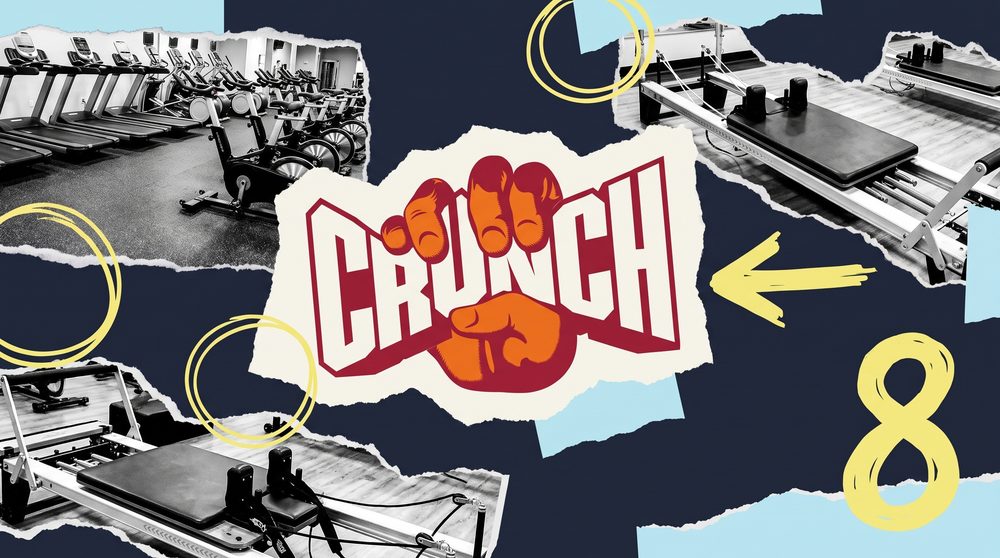
Crunch Fitness announced on August 7 that it had acquired the eight Bay Area locations belonging to the Bay Area Crunchers franchise group. The deal closed August 1. Crunch's corporate footprint in the region goes from eight clubs to sixteen, every Crunch in the Bay Area now sits under one owner, and Brian Calegari takes over as operating partner.
It follows the recent opening of Crunch San Rafael and comes ahead of Crunch El Cerrito, planned for Q1 2027.
A franchisor buying its franchisees out is the kind of headline people read as a distress signal, and sometimes it is exactly that. This one has a different shape, and the tell is what Crunch has been building.
Why would a franchisor buy its own franchisees out?
For control over capital and timing. A franchise agreement can require brand standards, signage, systems and reporting. What it cannot easily do is make eight independent owners each fund a major renovation, on the same schedule, to the same specification, when the payback runs over years. Buying the units converts a negotiation with eight balance sheets into a single decision. It is slower and far more expensive than asking, and it is the only method that reliably works when the answer to asking is "not this year."
What Crunch 3.0 actually requires
Refranchising normally describes a brand selling company-owned units to franchisees to raise cash and shift operating risk outward. What happened here is the reverse, and the direction matters because it tells you where the money needs to go next.
Crunch 3.0 is the brand's updated club template: boutique-style Pilates, better equipment, expanded wellness and recovery space. Read that as a list of line items rather than a positioning statement. Reformers and the floor space to put them in. Equipment replacement ahead of schedule. Recovery rooms carved out of square footage that currently holds something else. None of it is signage. All of it is capital expenditure inside an existing building, and in a franchised system that capital comes from the franchisee.
A franchise agreement buys you standards. It does not buy you a renovation schedule.
— The Run RateWhere control actually sits
| Decision | Franchised club | Corporate club |
|---|---|---|
| Brand standards and signage | Mandated by agreement | Direct |
| Pricing and promotions | Usually guided, often local discretion | Direct |
| Major renovation timing | Franchisee decides and funds | Direct |
| New format rollout across a region | Negotiated club by club | Single decision |
| Capital at risk | Franchisee | Brand |
The bottom two rows are the whole story. Crunch moved capital risk onto its own balance sheet in exchange for being able to move a region at once. That is a considered trade, not a rescue.
The read for operators who will never franchise anything
The transferable lesson is about sequencing. When a brand's next phase depends on money spent inside existing clubs rather than on opening new ones, ownership structure stops being a financing detail and becomes the binding constraint on strategy. Any multi-site operator hits a version of this. The moment your growth plan requires simultaneous change across sites you do not fully control, whether that is partners, landlords, or managers with profit share, the plan's speed is set by the slowest signature.
It also says something about where the budget gym category is heading. We covered the arrival of Crunch's new CEO and what it signalled for the budget fitness wars, and separately asked whether Crunch putting real money into Pilates could actually buy the boutique experience. This acquisition is the operational answer to that question. The brand decided the format change was worth owning the clubs to execute, which is a much stronger commitment than a press release about a pilot.
For independent studios in the Bay Area specifically, the practical implication is close to home. Sixteen Crunch clubs under one operator, aligned on a template that includes boutique-style Pilates, is a different competitor than eight corporate and eight franchised clubs each moving at their own pace. The upgrade will land faster and more uniformly than it would have. Price accordingly, and be clear about what your studio does that a Pilates class inside a big-box membership does not.
Watch El Cerrito in Q1 2027. If it opens on the 3.0 template and the acquired eight are converted by then, the thesis holds. If the conversions stall, this was about something else.